OUR SERVICES

INTEGRATING PEST MANAGEMENT


THE MODINITY PEST CONTROL SERVICES
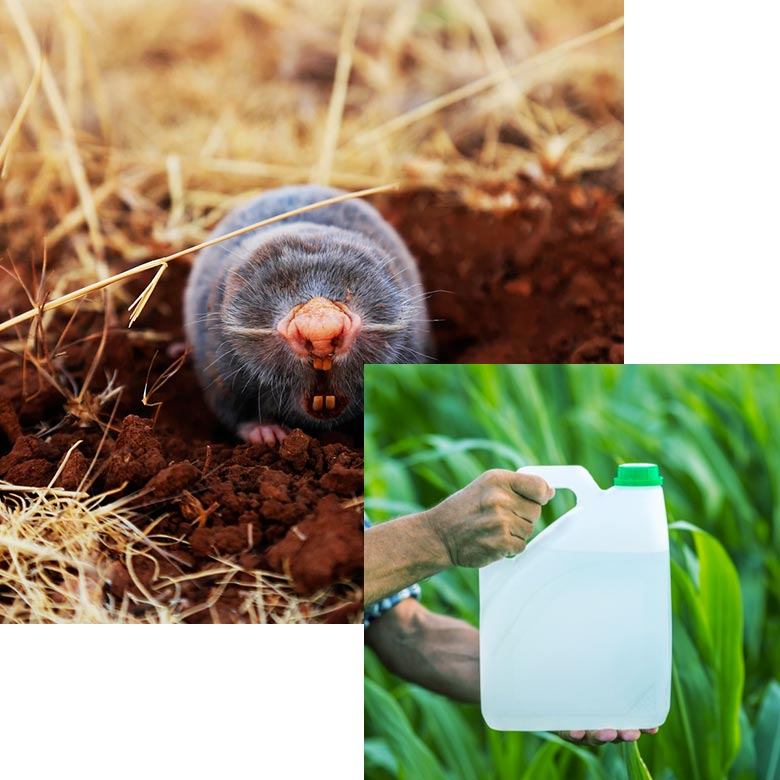

What is IPM?


Integrated Pest Management (IPM) is an effective and environmentally sensitive approach to pest management that relies on a combination of common-sense practices. IPM programs use current, comprehensive information on the life cycles of pests and their interaction with the environment. This information, in combination with available pest control methods, is used to manage pest damage by the most economical means, and with the least possible hazard to people, property, and the environment.


The IPM approach can be applied to both agricultural and non-agricultural settings, such as the home, garden, and workplace. IPM takes advantage of all appropriate pest management options including, but not limited to, the judicious use of pesticides. In contrast, organic food production applies many of the same concepts as IPM but limits the use of pesticides to those that are produced from natural sources, as opposed to synthetic chemicals.


How do IPM programs work?


IPM is not a single pest control method but, rather, a series of pest management evaluations, decisions, and controls. In practicing IPM, growers who are aware of the potential for pest infestation follow a four-tiered approach.


Set Action Thresholds

Before taking any pest control action, IPM first sets an action threshold, a point at which pest populations or environmental conditions indicate that pest control action must be taken. Sighting a single pest does not always mean control is needed. The level at which pests will either become an economic threat is critical to guide future pest control decisions.

Prevention

As a first line of pest control, IPM programs work to manage the crop, lawn, or indoor space to prevent pests from becoming a threat. In an agricultural crop, this may mean using cultural methods, such as rotating between different crops, selecting pest-resistant varieties, and planting pest-free rootstock and these control methods can be very effective.

Monitor and Identify Pests

Not all insects, weeds, and other living organisms require control. Many organisms are innocuous, and some are even beneficial. IPM programs work to monitor for pests and identify them accurately, so that appropriate control decisions can be made in conjunction with action thresholds. This monitoring and identification remove the possibility that pesticides will be used when they are not really needed or that the wrong kind of pesticide will be used.

Control

Once monitoring, identification, and action thresholds indicate that pest control is required, and preventive methods are no longer effective or available, IPM programs then evaluate the proper control method both for effectiveness and risk. Effective, less risky pest controls are chosen first, including highly targeted chemicals, such as pheromones to disrupt pest mating, or mechanical control, such as trapping or weeding.


Benefits of IPM
Benefits of IPM provides multiple benefits for society and the environment.

  • Improved crop profitability due to better pest control measures and appropriate use of crop protection products.
  • Stable, reliable, and quality crop yields
  • Decreased severity of pest infestations
  • Reduced potential for problems of pest resistance or resurgence
  • Increased consumer confidence in the safety and quality of food and fiber products

Crop protection companies that integrate IPM principles into marketing and customer support for their products also stand to benefit from:
  • Sustained market share and access
  • Less risk of restrictions or deregistration
  • New opportunities for established and novel products, techniques, and services
  • Longer product lifecycles
  • Decreased resistance of pests to crop protection products and biotech plants
  • Increased public confidence in, and credibility of, the crop protection industry
Pest management tactics

There are different pest management tactics to suppress pests. Each category, discussed below, employs a different set of mechanisms for suppressing populations.

Synthetic chemical pesticides are the most widely used method of pest control. The use of natural pesticides and organophosphates that are more environmentally friendly are encouraged and synthetic pesticides should only be used as a last resort or only used as required and often only at specific times in a pests life cycle.
This involves the use of other living things that are enemies of a pest in order to control it. IPM is mainly aimed at developing systems based on biological and non-chemical methods as much as possible.
This involves breeding varieties with desirable economic traits, but less attractive for pests, for egg laying and subsequent development of insect, disease or nematode. It also involves withstanding the infestation/infection or the reduction of pests to level that they are not large numbers during the plant growth period.
This involves practices that suppress pest problems by minimizing the conditions that favour their existence (water, shelter, food). The culture should be selected in such a manner that it should be suitable for growing in the area and tolerant to important pests diseases of the area.
This is the use of machinery and other tools to control pests. It involves agricultural practices like tillage, slash and burn, and hand weeding. The pruning of infested parts of fruits and forest trees and defoliation in certain crops help reduce the pest population. Chaffing of sorghum/maize stalks and burning of stubbles kills maize borer.
Preventive practices are important part of an IPM programme. These include cleaning field equipment (i.e., tillage equipment, haying equipment, etc.), planting certified seeds and quarantine of infested crops or farmlands. These are methods used to prevent the introduction of a pest into the field.
Natural control involves the enhancement of naturally occurring pest management methods to combat pests like using beneficial insects and diseases. Here, insecticides will only be used when they are economically feasible and it is apparent that natural enemies will not control the pests.
EMERGENCY SERVICE

24h Service Hotline

+92-302-8312323

STEP 1

Gravida varius

Mauris rhoncus orci in interdum imperdiet placerat. Vestibulum ligula.

STEP 2

Duis dignissim

Phasellus vitae vulputate elit. Fusce interdum justo quis ligula mauris.